Haiti Anthropology Brief: Cake of Vulnerability and Adaptation to Poverty
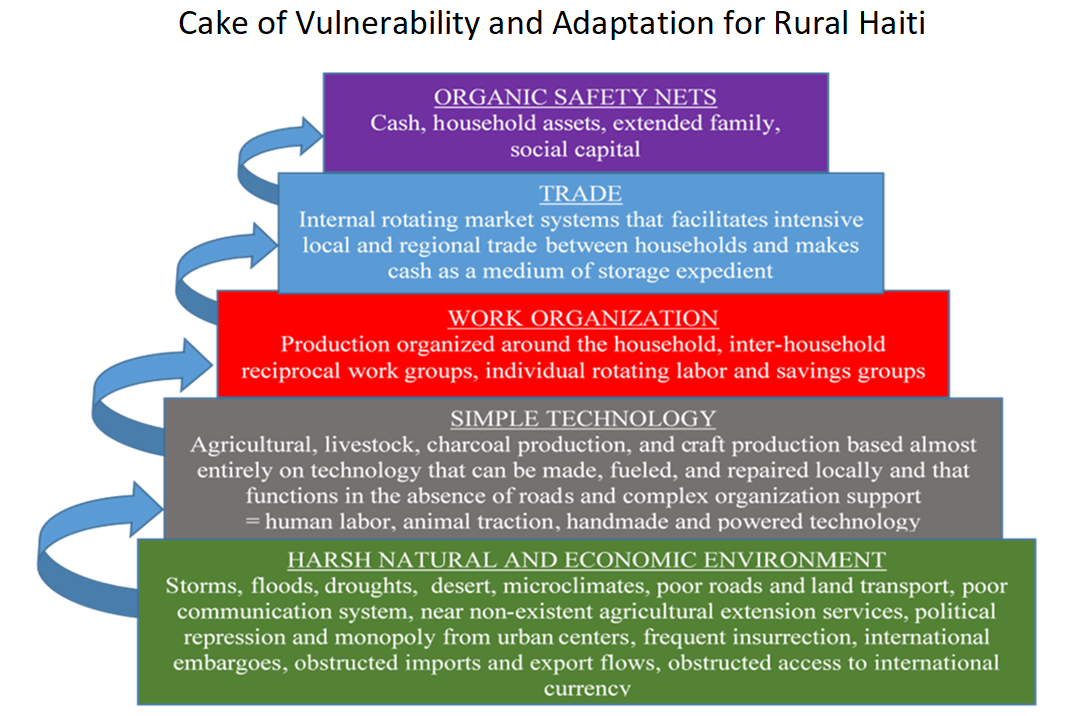
Here are a series of diagrams intended to make the prevailing rural Haitian household livelihood strategies easily understandable. The first diagram, above, is what we are calling, “The Cake of Vulnerability.” It is a model reminiscent of Marx’s Infrastructure, Structure and Super-structure description of modern human social organization. Here it is inspired by the moreRead More
Failure of the HDVI : Beneficiary Criteria, Indicators, and PMT (Proxy Means Test) in Haiti (Human Deprivation and Vulnerability Index)
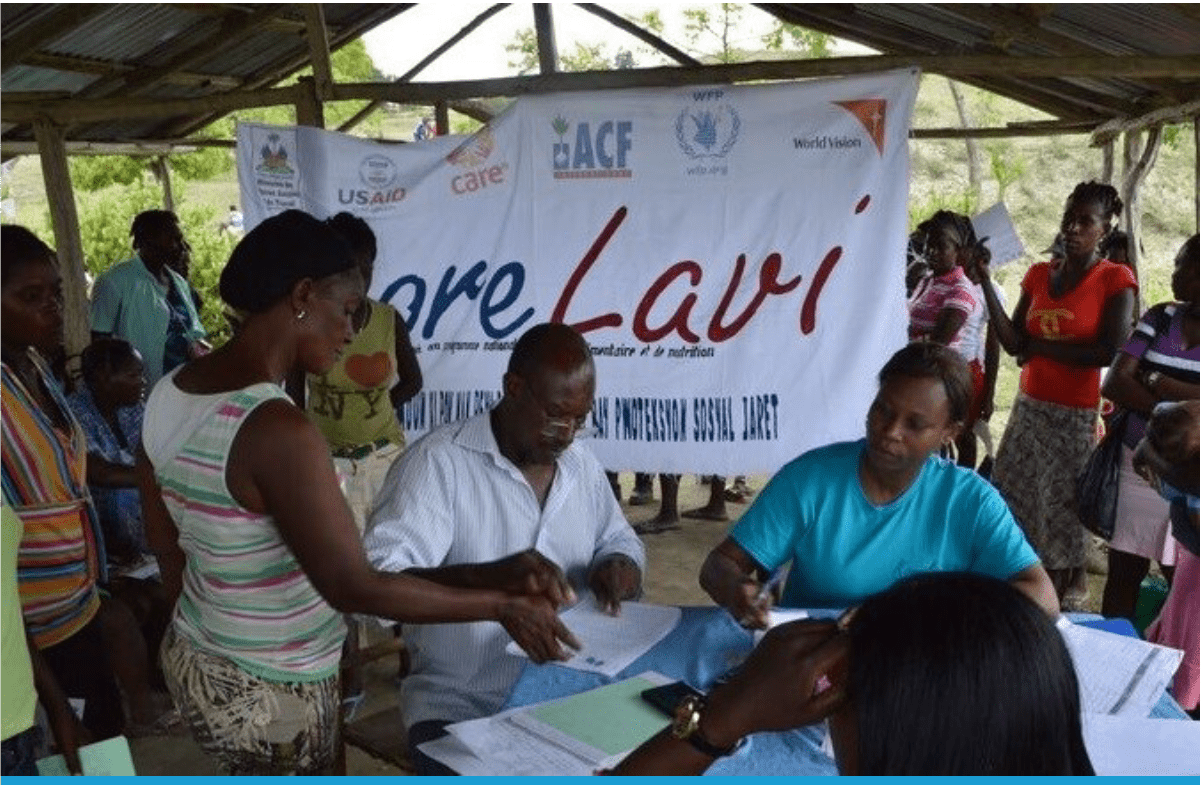
To identify most vulnerable beneficiaries, humanitarian organizations in Haiti have often used criteria based on expectations from elsewhere in the world, criteria that are often not based on data, and that, more often than not, fail in Haiti. The best and most controversial flood of examples comes from the World Bank/WFP/USAID supported HDVI (Humanitarian DeprivationRead More
Irony of the Exports: Superiority of the Local Market for Haitian Mangoes
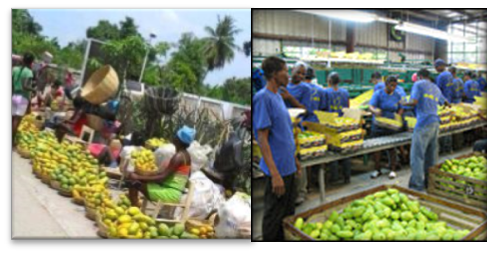
A closer look at evidence and trends in the market suggests that the local market for mangos is better than that of the export market. It offers producers more money. Indeed, to get mangos from producers, the exporters, their voltije and fourniseur agents have to resort to trickery and financial advances on trees 9 monthsRead More
Belying Basket of Mango: TRAVESTY OF EXPORT VS. LOCAL MANGO PRICES Part II
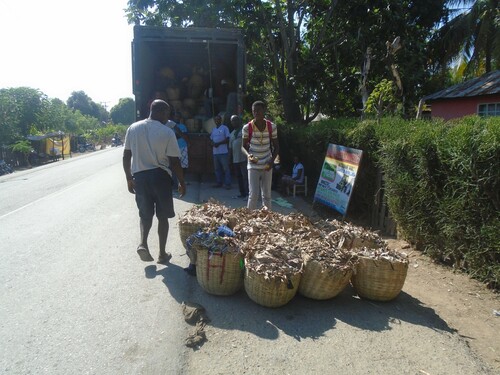
If we consider the value of a panye (basket) in terms of a poor market woman selling mangoes in the local market, where 95% or more of all Haiti’s mangos get sold, there is clearly a price floor at which point it makes no sense to harvest and sell mangos. There is a point whereRead More
Cheaper by the Dozen Mango Travesty II
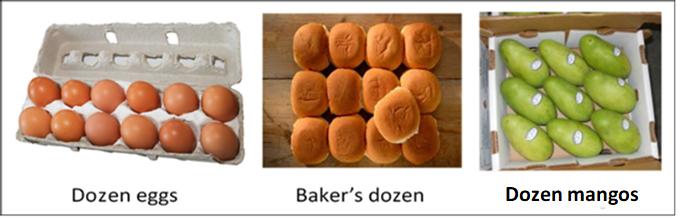
Puzzling regarding change in prices, size of dozens and reject rates is that HAP made claims in 2005 almost identical to those of Haiti Hope project claims in 2014 and 2015. Quoting directly from the HAP 2005 evaluation, Field interviews indicated that ten years ago producers were paid four gourdes for a dozen mangos, andRead More
Cheaper by the Dozen Mango Travesty I
It is not at all what NGOs or Haitians mean–any of them—when they say “dozen.” Not those in the mango business anyway. First off, for the poor Haitian producers, they do not measure in weight and they seldom measure in number. They measure in volume. Hence when trading locally in mangos they do not useRead More
Haiti, Not Open for Business: Another Dried Mango Export Travesty
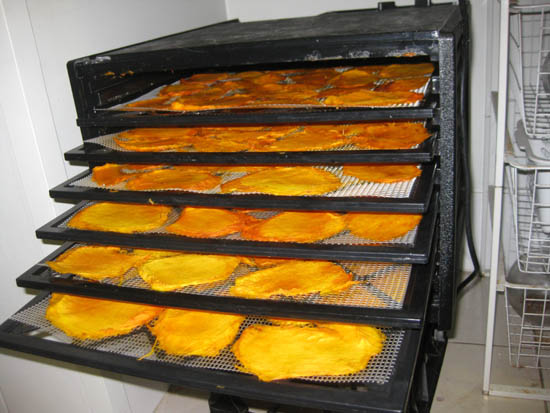
Despite a whole lot promises and some $120 million donor dollars invested in the domestic mango industry over a period of 20 years, as of 2015, Haiti had no new mango processing facilities. A 2012 TNS feasibility study showed that a Coca Cola supported juice and pulp processing factory would be profitable only after 10Read More
Lying Sack of Mango: Travesty of Export Prices
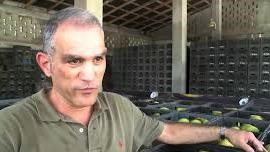
This article summarizes how USG funded aid agencies and contractors have manipulated price data to make it appear that they have improved the export market chain price for mangoes. As seen below, they’ve rather boldly misrepresented their own data to make their case.
Haiti Hope Gender Travesty
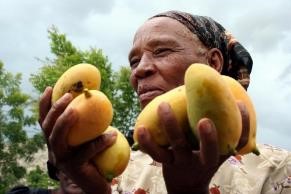
In this paper I take a look at how NGO use of “asosyasyson”–what might better be called cooperatives–have probably hurt the economic autonomy of rural Haitian women. Specifically I look at USAID/Coca Cola/IDB funded Haiti Hope Mango project. The project was implemented by TechnoServ. I don’t mention it here, but we’ve observed a similar phenomenonRead More
The Travesty of Haiti Hope and Haiti’s ANEM Mango Cartel: Part II

An illustration of how dysfunction ANEM is but how it’s members relish aid and support from international donor community came after the 2010 Haiti earthquake when USAID, Coca Cola, and IDB funded the Haiti Hope project, investing $10 million in the mango sector for the period 2010 to 2015. The donors and ANEM claimed theRead More
Email Updates
Get notified when new research is released by signing up below.